Intake and Referrals Services

Intake and referral services triage people with legal problems to spot legal needs fast, capture key facts, and route people to the right help provider with warm handoffs and clear next steps.
More About This Legal Services Area
Intake & Referral is the entry point for people seeking legal help across phone lines, web forms, chat/SMS, walk-ins, and partner referrals. This team translates a person’s story into structured data (jurisdiction, legal issue, deadlines, risk flags, eligibility) and determines the best next step: information and self-help resources, brief advice, a clinic appointment, limited-scope drafting, or full representation. Where the organization is not the right fit, Intake & Referral connects users to external providers with clear warm handoffs. Operationally, the team balances speed and accuracy under fluctuating demand. They use standardized scripts and checklists to surface urgent issues (e.g., imminent lockout or safety risks), identify deadlines, and gather documents. They also apply eligibility rules (income, residence, conflict checks) and service capacity constraints to decide what the program can take on. A well-run intake function reduces bottlenecks downstream, improves equity in who gets served, and provides clean, reusable data for legal staff, navigators, and partners. The team works across channels and literacy levels, offering multilingual, trauma-informed communication and plain-language explanations of what will happen next. They are also the program’s feedback loop: patterns in demand, failure modes in referrals, and link rot in self-help resources are captured here and fed back to Legal Ops, practice leads, and technology teams for continuous improvement. Because intake captures sensitive information, the function operates with strong privacy, consent, and scope controls: what’s collected, why it’s needed, how it is stored, and when it is shared. Clear refusal patterns (e.g., outside jurisdiction, criminal defense when not in scope) and escalation pathways (e.g., safety threats) help the team make consistent, defensible decisions. Typical workflows (examples) Triage & risk screening: Identify emergency flags (safety, homelessness risk, court deadlines), disability/language access needs, and referral urgency. Issue & jurisdiction identification: Map the narrative to LIST codes, venue/county, and case posture (pre-filing, active case, judgment). Eligibility & conflicts: Apply income/asset screens, residency, funder restrictions, and run conflict checks; capture required attestations. Channel-specific intake: Web form, hotline, SMS/chat, or walk-in scripts; upload “scary legal mail” and extract key data (deadlines, case number). Service matching: Decide between info, brief advice, clinic, limited scope, full rep, or external referral; capture rationale and waitlist logic. Referral orchestration: Warm handoffs with appointment slots, documents checklist, directions, and expectations; follow-up confirmation. Documentation & QA: Record structured fields, notes, and artifacts; apply checklists; run periodic file reviews for consistency and equity. Feedback & escalation: Report surges, unmet needs, and broken links; escalate safety or off-scope matters to designated leads.
LIST (Legal Issues Taxonomy) Code
AI Projects around this Legal Issue
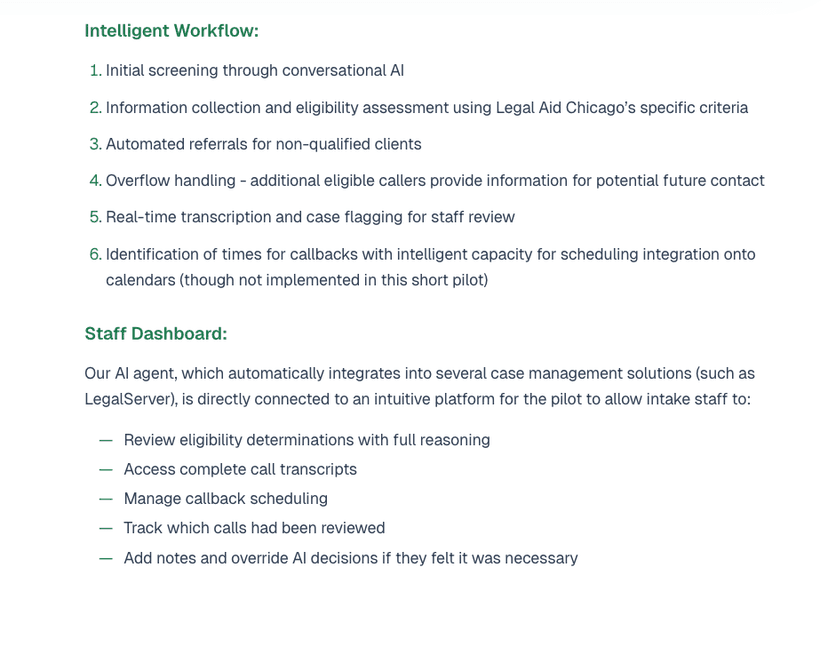
Chicago Voice AI Intake
A commercial voice-powered AI intake assistant that handled family law calls over a three-week pilot at Legal Aid Chicago, triaging callers, flagging domestic violence priority cases, and reducing out-of-priority screening outcomes.
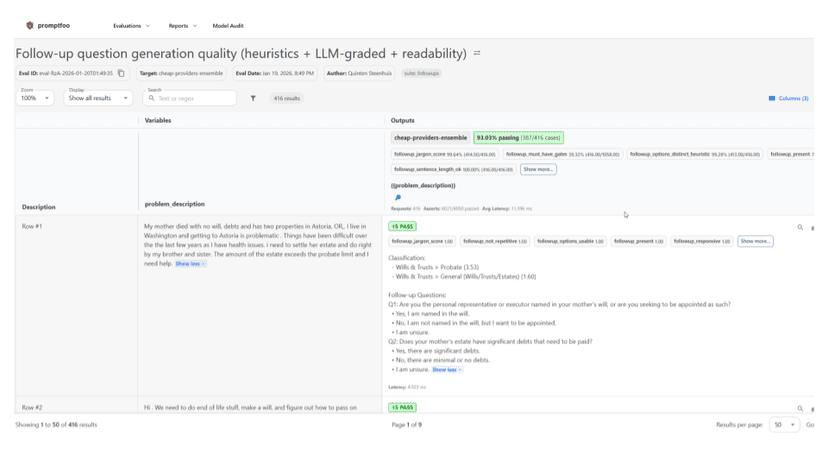
Fetch legal issue classifer
FETCH is a lightweight, ensemble legal-issue classifier that helps intake systems classify a user's legal issue and route them to the right service, faster and at lower cost than a single large model.
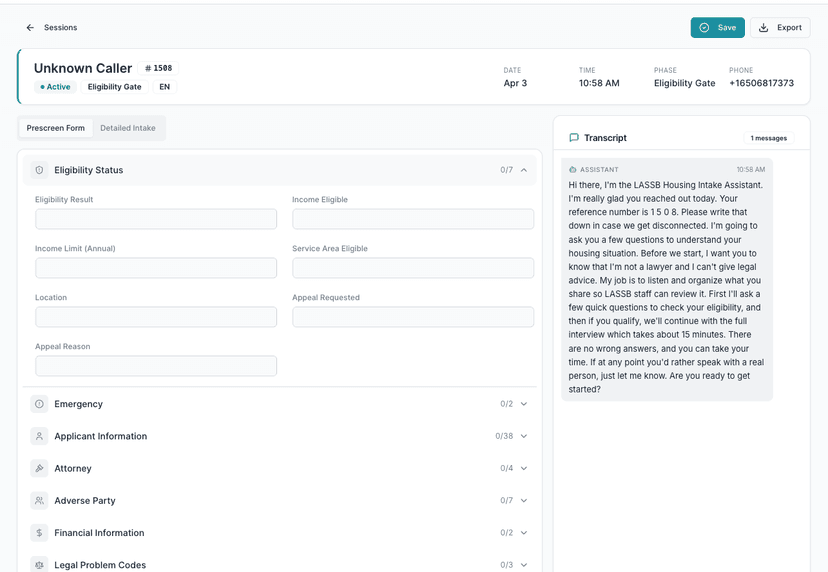
Housing Intake Voice AI Line
A bilingual AI phone agent that conducts the full legal aid intake interview (100+ questions across prescreen and detailed intake), checks eligibility in real time, triggers human conflict review, and auto-populates LegalServer case management forms as the caller speaks: replacing hold times and manual data entry with immediate, 24/7 access.

Justice Connect Legal-Problem Classifier
An AI model—developed by Justice Connect with the University of Melbourne—that classifies people’s free-text descriptions of problems into legal issue categories, now available under a no-cost licence to eligible Australian not-for-profits.
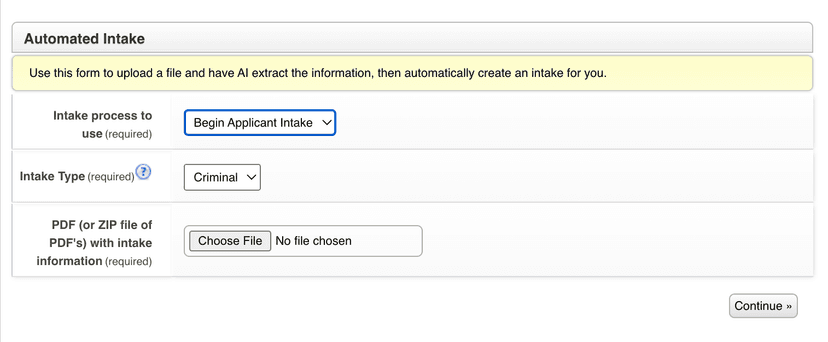
Automated Intake Data Extractor
LegalServer's Automated Intake Mode allows organizations to upload scanned or digital documents and automatically extract structured intake data into their case management system.
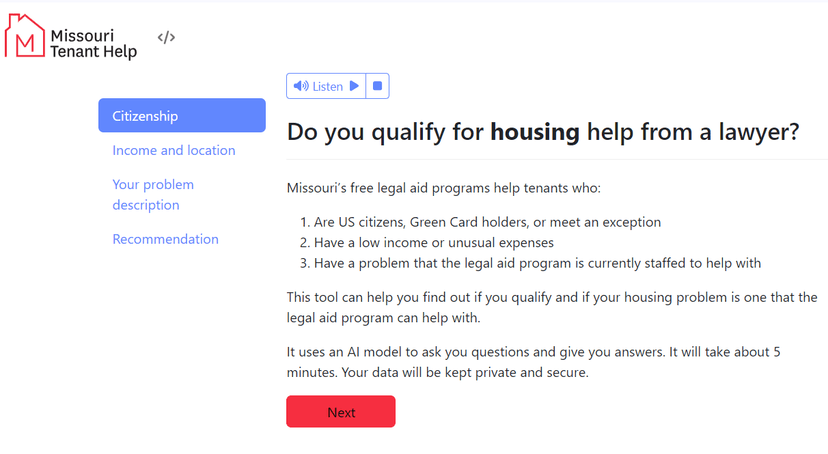
Missouri Tenant Help Intake Screener
A hybrid rule-based and LLM-powered intake screener developed for Missouri Tenant Help to help determine legal aid eligibility more efficiently and consistently.
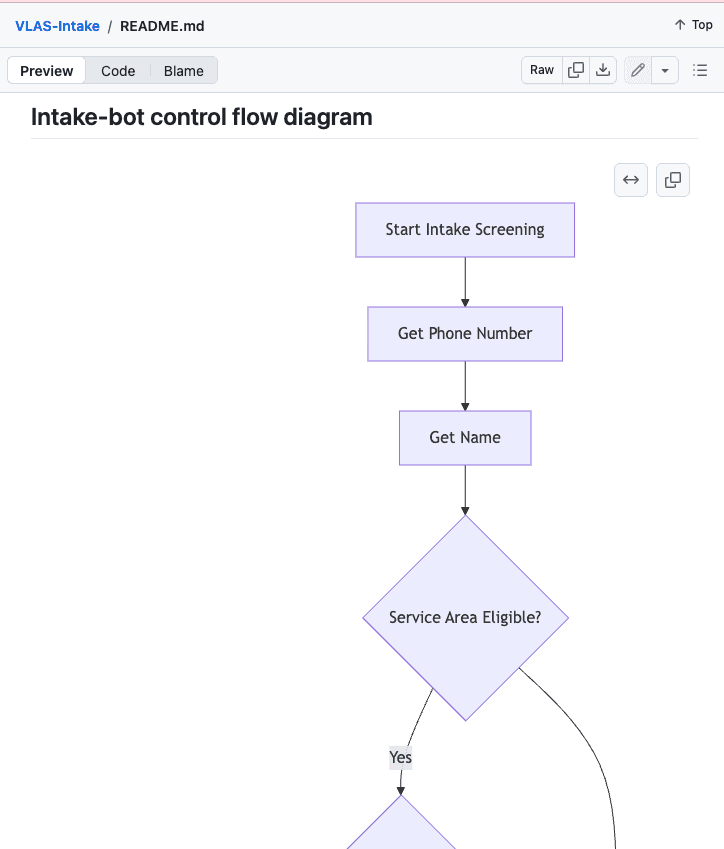
VLAS Voice Intake AI Line
A voice-first AI intake system for Virginia Legal Aid Society that conducts phone-based eligibility screening and full intake interviews, runs automatic conflict checks via LegalServer API, and surfaces completed intake summaries for paralegal review: aimed at replacing a two-hour average queue time with immediate AI-answered calls across a toll-free line handling 18,000 calls per year.