When people first seek legal help, their stories are often complex and mixed with multiple problems—housing, family, debt, benefits, or employment issues all intertwined. The task of issue-spotting is to accurately recognize which legal issues are actually involved. This may include analyzing a narrative, reviewing uploaded documents or notices, or asking clarifying questions to surface hidden or secondary problems.
Effective issue-spotting allows both people and systems to route the matter to the correct information, tools, or services. For AI tools, this means detecting legal problem types and sub-issues from natural language or document text, while avoiding false positives or omissions. For human helpers, it’s the foundation for triage, referral, and tailored guidance—ensuring that people start on the right path toward resolution.
Scope and Boundaries
This task covers
Belongs to a different task
How to choose
For Builders and Evaluators
Build difficulty
Moderate
Binding constraint
Legal content. The taxonomy and the labeled data are the work
Evaluation mode
rubric
Maintenance
Medium
Model is the hard part?
Yes
Who should build it: In house on a platform, with the labeled corpus built once and shared
How to evaluate: Rubric: issues correctly identified against expert labels, precision/recall
4 Projects Building This
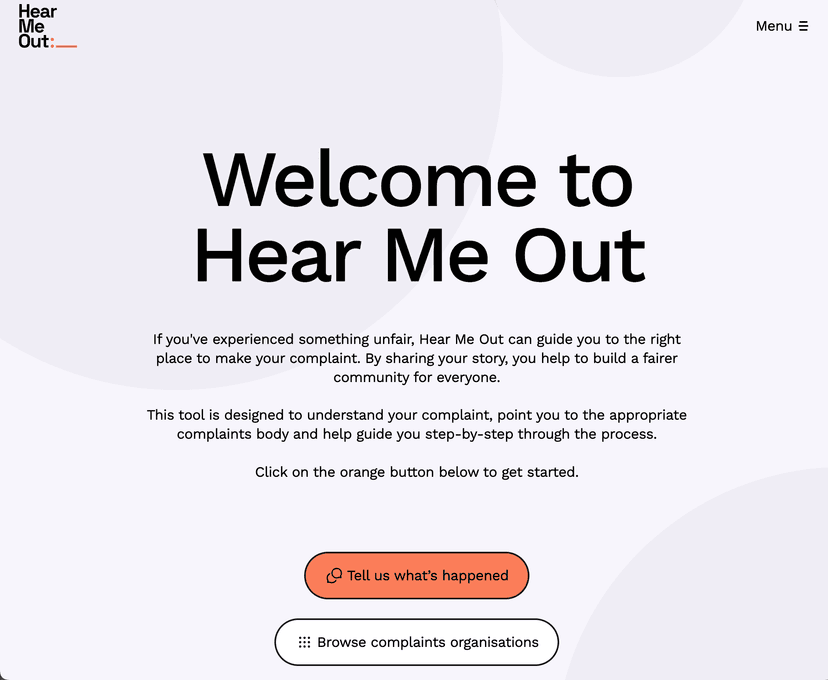
Hear Me Out
A free, AI-assisted platform that helps people in Australia describe their experience and get tailored guidance on where and how to lodge complaints, starting with NSW and Federal bodies and expanding to Victoria.
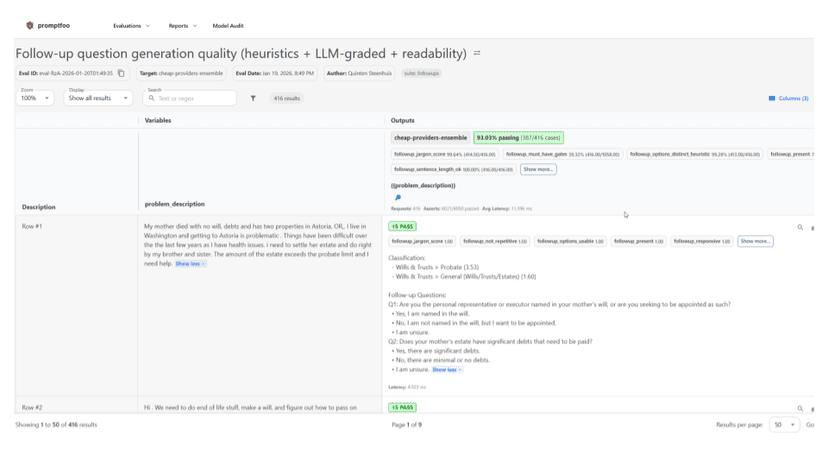
Fetch legal issue classifer
FETCH is a lightweight, ensemble legal-issue classifier that helps intake systems classify a user's legal issue and route them to the right service, faster and at lower cost than a single large model.
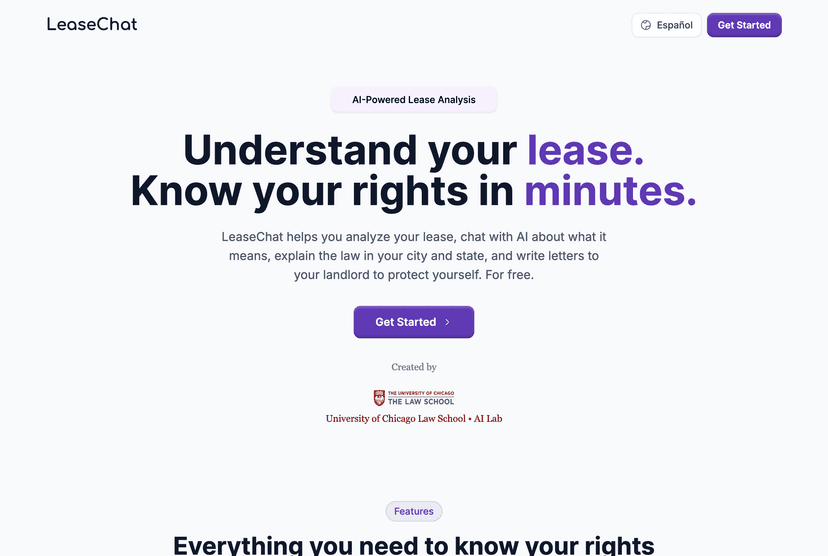
LeaseChat
LeaseChat is a free tool that analyzes residential leases, answers questions with references to the document and local law, and drafts landlord communications.

Justice Connect Legal-Problem Classifier
An AI model—developed by Justice Connect with the University of Melbourne—that classifies people’s free-text descriptions of problems into legal issue categories, now available under a no-cost licence to eligible Australian not-for-profits.
Legal Help Commons
Looking to implement this task? The Legal Help Commons has implementation playbooks, working groups, and shared tools.
Visit Commons ↗·Join a Working Group ↗Other Getting Brief Help Tasks


Added in vv0.1 · Modified in vv0.2