The Access to Justice Domain
Are you a technologist, researcher, data scientist, or professional who is new to the world of legal aid, courts, and civil legal problems? Learn the basics of what a person’s journey looks like and how service providers work to help.
Common Stages of a Person’s Justice Journey
How does a legal problem play out in a person’s life? Different legal problems, such as eviction, debt collection, divorce, driver’s license suspension, or other disputes, often follow the same 7 stages.
Use this overview to understand where AI might help a person. Then explore the Task Taxonomy to see the specific AI opportunities at each stage.
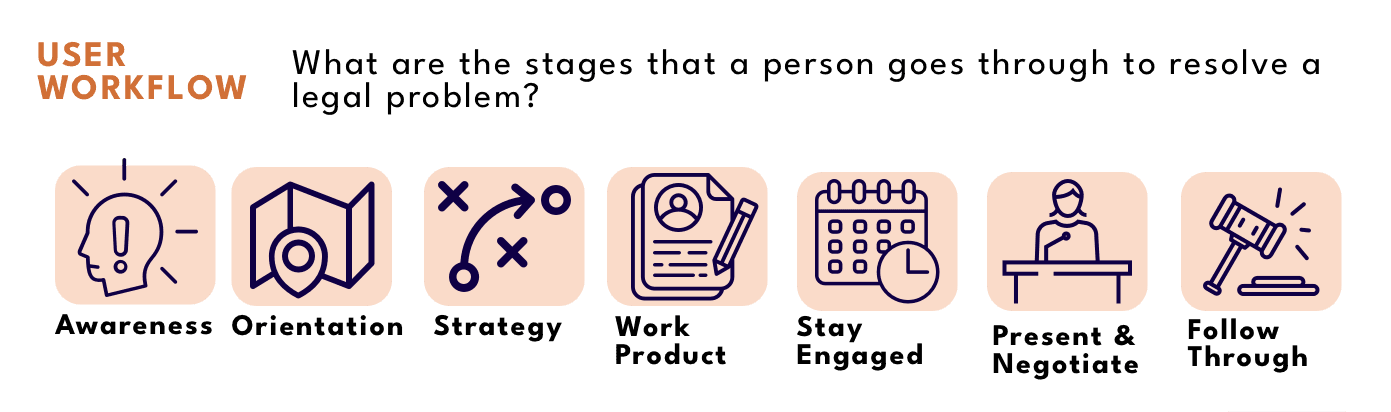
Awareness Stage
As a conflict brews, the person begins to recognize that they might need legal help to deal with it. They begin to seek out help online, through friends, or by contacting a service provider.

Orientation Stage
The person gets a diagnosis of the exact legal scenario they are in, what the law says about their rights, what options they have, and what services can help.

Strategy Stage
The person decides how they want to handle the problem. They weigh their goals, rights, and risks. They choose what path to take and get a plan of action, including paperwork, research, hearings, meetings, and more.
Work Product Stage
The person drafts documents and forms to file, researches the law, gathers and organizes evidence, responds to requests, makes requests of the other side, and crafts talking points.
Engagement Stage
The person completes all of the steps, deadlines, and procedural requirements. They file things on time, make payments or get fee waivers, attend required meetings and hearings, and stay updated on their case progress and obligations.
Present and Negotiate Stage
The person presents their case to the judge or decisionmaker, answers questions, and interacts with the other party. They may also negotiate with the other side, and respond to settlement offers.

Follow-Through Stage
After a decision or settlement, the person must ensure they understand what the final arrangement is and how to live up to it (or enforce it). They may need to comply with orders, secure what they won, or clear their record to prevent collateral consequences.
Service Providers’ Workflows
Legal aid groups, court help centers, pro bono clinics, and other justice workers have common clusters of tasks. These tasks relate to the front-facing services or back-end operations of providing legal help to the public.
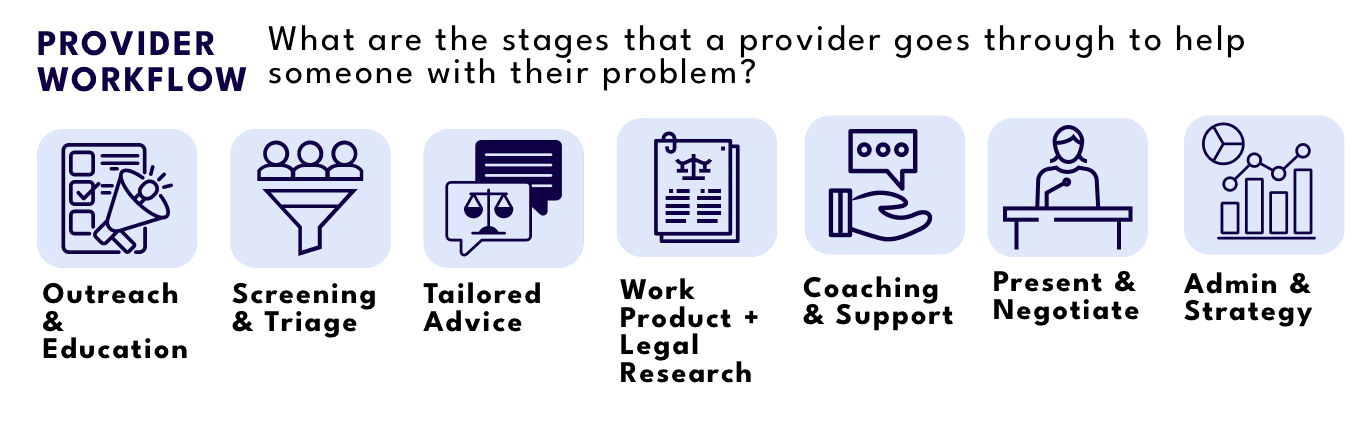
Outreach & Education
The provider tries to connect with the right audience by raising awareness, providing legal information, building trust, and helping people recognize legal issues and seek help.
Screening & Triage
The provider attempts to understand each person's background and legal issue to determine if and how the organization can help. This includes routing people to services, guides, or referrals.
Tailored Advice
The provider provides the user with detailed, custom advice on their legal options, risks, and next steps. Advice is specific to the user's goals, context, and documents, and it is designed to support informed decisions.
Work Product & Legal Research
The provider researches the law, drafts and files documents, analyzes legal options, collects evidence, and keeps them on track with deadlines and next steps.

Coaching & Support
The provider gives ongoing encouragement, legal education, and guidance throughout the justice journey, so users stay involved and making informed decisions.

Present & Negotiate
The provider presents the case to the judge or decisionmaker, answers questions, and interacts with the other party. They may also negotiate with the other side, and respond to settlement offers.
Administration & Strategy
The provider monitors cases and outcomes overall, manages staff and reporting, spots patterns, operates tech, and identifies areas for service improvement, policy change, strategic litigation, or tech innovation.
Explore the Task Taxonomy
Across all different problem types and geographies, what specific tasks can AI do to improve how people get legal help and how providers serve people? Explore the full taxonomy of 30+ AI tasks organized by workflow stage.
View All Tasks →